

Need a Shipping Total?
CLICK HERE TO SEE ALL OF OUR ANIMAL WATERERS
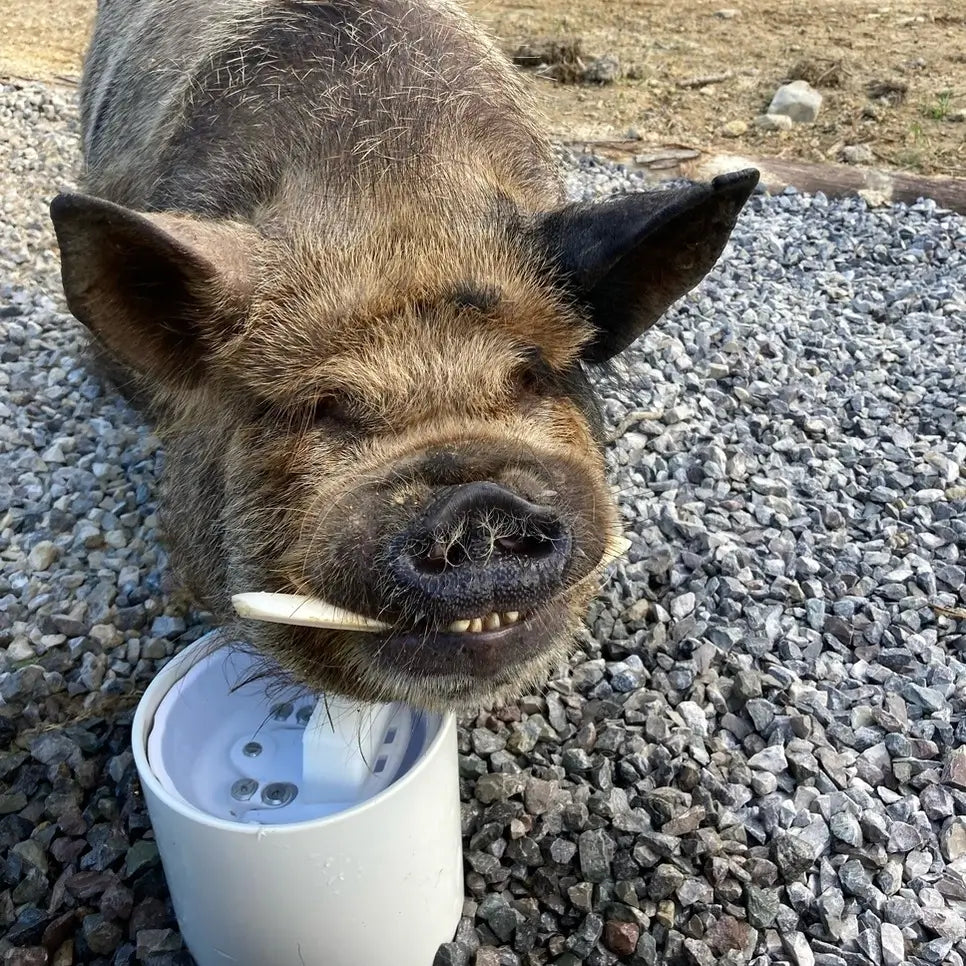
This is the new 'ULTIMATE' drinker.
The Drinking Post Waterer
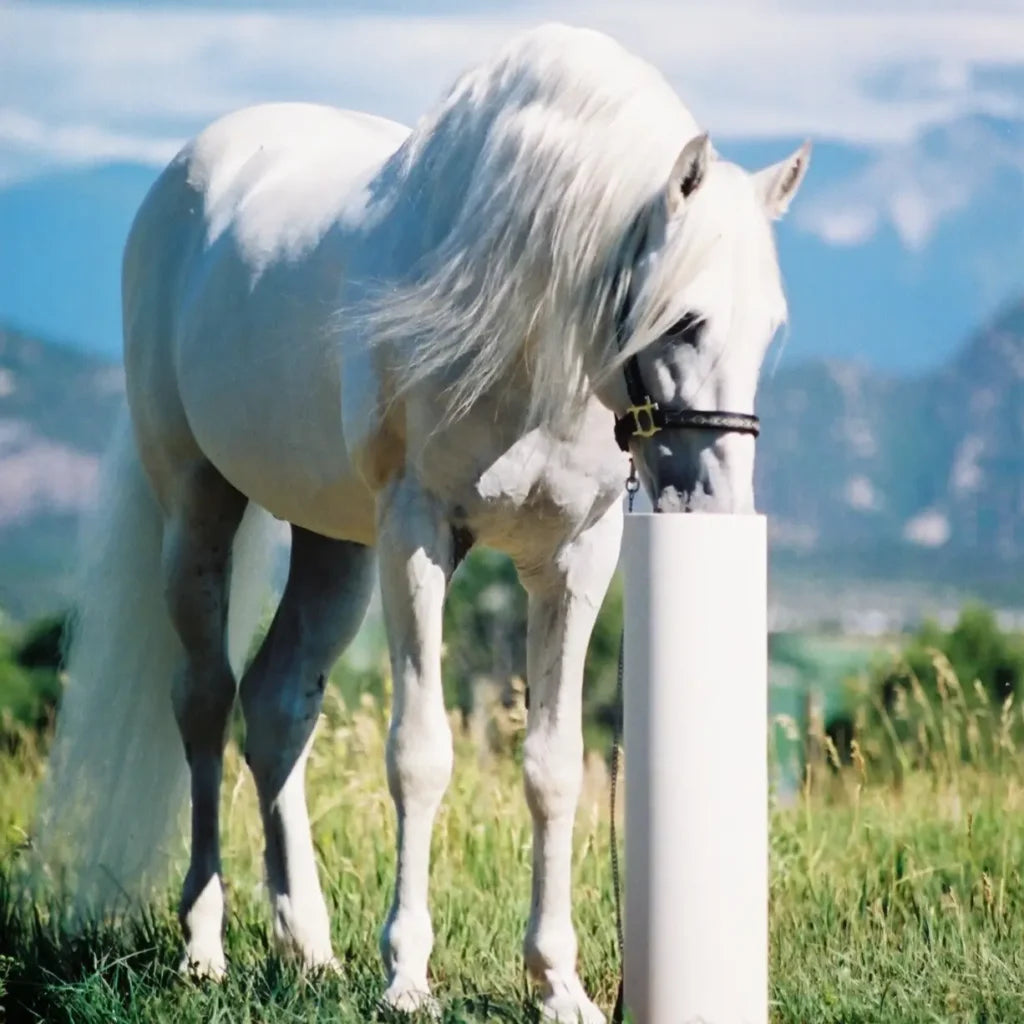
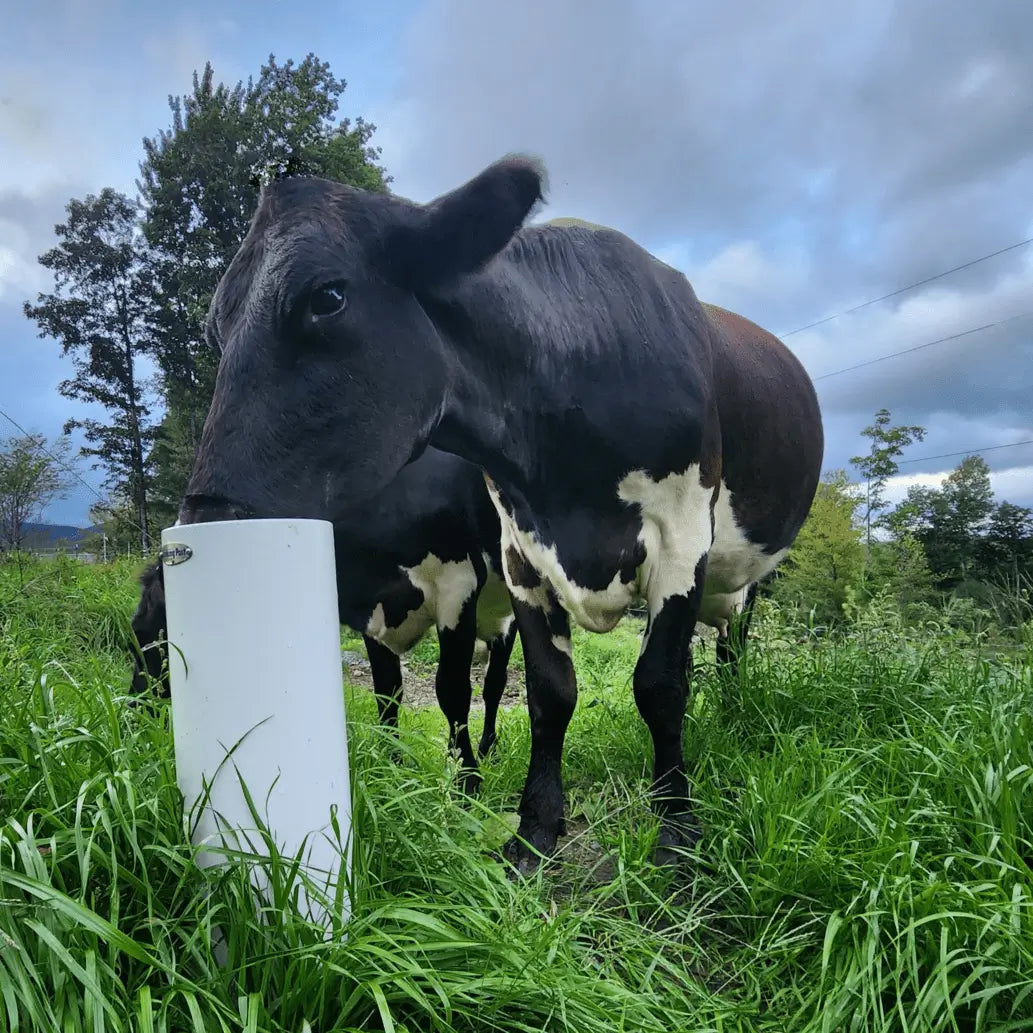
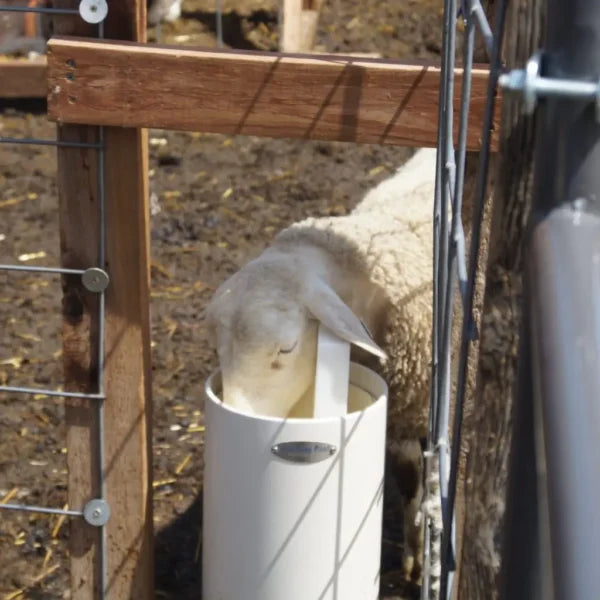
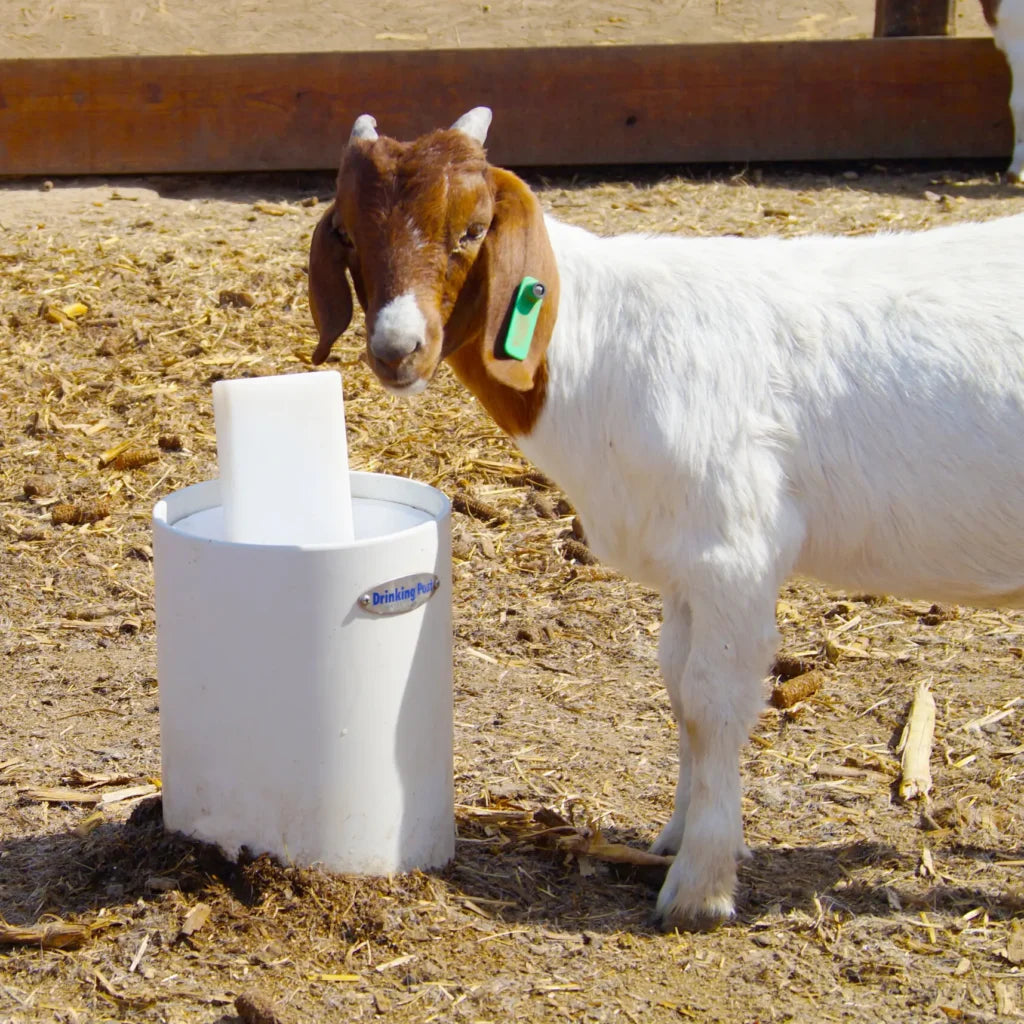
This hands-free post waterer guarantees your horses and ranch animals have access to clean, non-frozen water throughout the year. Your livestock can tap into an underground water supply that maintains a consistent 50-degree temperature all year long. This innovative system doesn't require electricity and eliminates the need for stored water, ensuring there's no risk of freezing or ice during winter. In summer, the absence of standing water prevents the growth of algae, mosquito eggs, and other unsanitary conditions or pests that can spread disease.
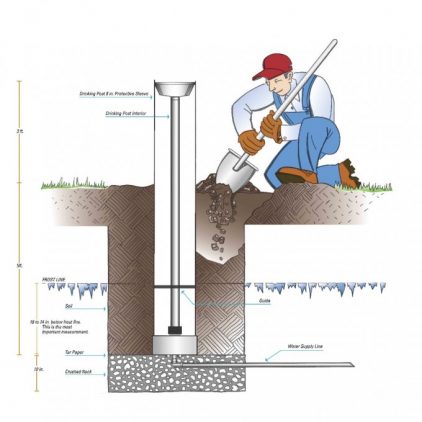
Installation diagram
Quality and Reliability
The waterer was developed in Colorado in the early 1970s in response to the challenges posed by seasonal temperature fluctuations. Before then, the available automatic waterers, mainly float systems or thermos-type systems, had significant drawbacks that made them less than ideal. This led to the creation of the Drinking Post Waterer, the first non-electric automatic waterer.
Our goal was to design a waterer that was simple, strong, and inherently reliable. We achieved this through a straightforward design and the use of high-quality materials in its construction.
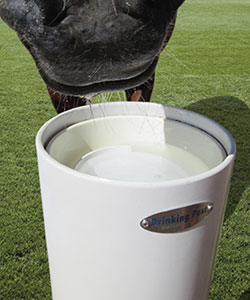
Horse Drinking Post Water Bowl
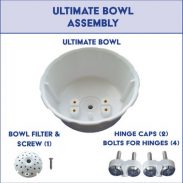
Why It's The Best Solution for Clean Drinking Water Year-Round
On-demand watering ensures clean, fresh water every time! No standing water to attract dirt, flies, or mosquitoes. There’s no algae growth, and the continuous water supply means you’ll never need to fill a tank again.
No Electric Needed
No need for electricity—the water temperature stays around 50 degrees year-round. This freeze-proof system operates ice-free by draining immediately, with no water standing above the frost line. Plus, no concrete pad or insulation is needed to provide fresh water for your animals.
No Headcount Limitation
Perfect for both large and small groups of animals. Unlike other waterers, there’s no minimum usage required to prevent freezing, making this a versatile solution for any herd size.
Durable and Maintenance-Free
Constructed with stainless steel fasteners and a resilient poly valve housing, this waterer is built to provide decades of hassle-free operation.
What's NOT Required!
- No heaters or heating elements to maintain or replace
- No float mechanisms to adjust
- No cement pad needed
- No electrical components or bills
- Not a thermos-style system
- No internal filters to clean
- No minimum usage to prevent freezing
- No need for used tires in cold climates
- No regular maintenance required for year-round peak performance!
Show your horse how it works!
Horse Drinking Post Review
The Horse Drinking Post is Big Enough for Draft Horses Too!
Reliable Waterer Operation
With only three moving parts, the Drinking Post is designed to minimize malfunctions, making it a hassle-free solution for livestock. Installed across the U.S., Canada, Iceland, and Europe since 1974, this waterer operates without electricity, staying frost-free all winter. It’s the longest field-tested non-electric waterer, providing fresh water at a consistent 50°F year-round. In summer, it delivers cool water, while in winter, it provides warm water—encouraging optimal water intake for horses, cattle, and other animals.
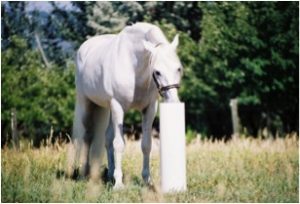
This is why The Drinking Post proves time and time again to be the waterer of choice in both cold and warm climates.
How to determine your size
- What type of animals will use the Drinking Post Waterer?
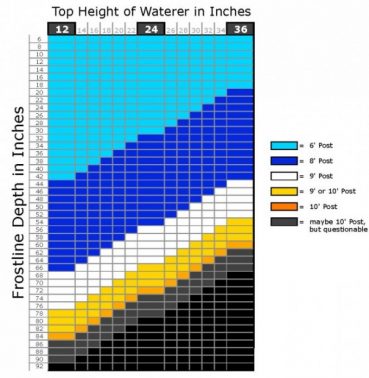
- How deep is the local frost line? Compare to the chart to determine the length needed to prevent freezing.
What animals will be using the Drinking Post Waterer?
All Drinking Posts are the same diameter and have the same size bowl. Depending on your specific application, you can install the Drinking Post Waterer such that the height of the unit when installed is at whatever height above ground you desire.
You want to ensure that your animals can reach the top of the waterer comfortably. Generally, this is the typical height of the Drinking Post Waterer above ground level once installed.

Installation Height Recommendations
While the specified installation heights are not mandatory, they are recommended to ensure optimal use and functionality. It is essential that your animals can easily reach the top of the waterer. Many choose to adhere to these suggested heights to help prevent unwanted hoof traffic and manure from contaminating the water supply.
Understanding Your Local Frost Line
The frost line indicates the maximum depth to which the ground will freeze during winter. To avoid freezing issues, it is crucial to install The Drinking Post at least 18 inches below your local frost line.
How to Find Your Local Frost Line
You can determine the frost line in your area through several methods:
- Contact your local building department.
- Reach out to your county's water department.
- Speak with a reputable local excavator who can provide this information quickly.
Additionally, you can consult the frost line maps below for a general idea of your area's frost line depth. Please keep in mind that these maps are intended as a guideline only.
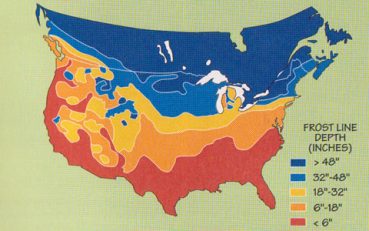
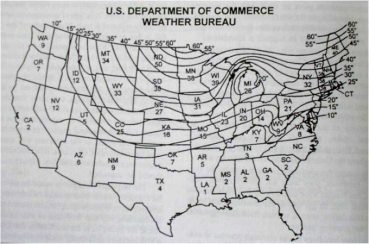
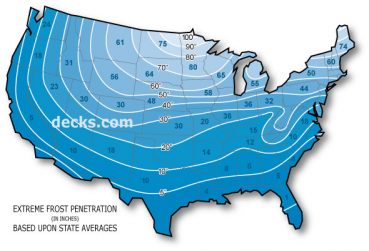
As you can see, these maps themselves show different frost line depth data. Because of this, you need to follow one of the avenues outlined above to obtain accurate frost line depth information for your exact location. The website for your local municipality's (Water or Building department) may list this information online, too.
Once you determine your local frost line depth and your desired height above the ground when installed, use the graph below to determine what size waterer will be best for your needs.
Health Benefits of No Standing Water
Using traditional water sources like buckets, troughs, or float systems often leads to standing water during the summer months. With 'The Drinking Post' waterer, you can enjoy several significant benefits that eliminate the hassles associated with standing water:
- Algae-Free Water: No more dealing with unsightly algae growth.
- Reduced Spread of West Nile Virus: Helps minimize the risk of virus transmission.
- No Mosquito Eggs: Keeps your water source free from mosquito larvae.
- No Algae Build-Up: Say goodbye to scrubbing and cleaning.
- Optimal Water Temperature: The water is delivered fresh from the supply line at approximately 50°F year-round, ensuring warm water in the winter and cool water in the summer.
Anyone familiar with troughs knows the health risks posed by rodents or birds that may fall into the water. These incidents can lead to serious health hazards for livestock. Additionally, bird droppings are a common yet less obvious source of contamination. With The Drinking Post horse waterer, these concerns are eliminated. The water source is positioned three feet above the ground, and because there is never any standing water when the waterer is not in use, you can be confident in the cleanliness and safety of the water provided to your animals.
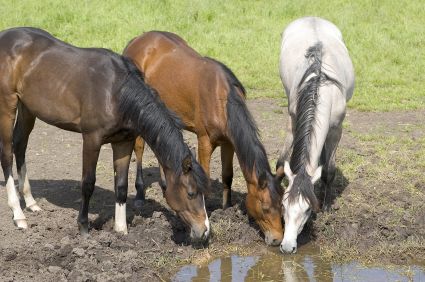
Stagnant horse water as pictured here can discourage adequate water intake and carry disease. Stagnant ponds, buckets, and water tanks contaminated with algae or over or under-heated water can also discourage healthy water intake. Some algae, specifically blue-green, can be toxic to horses. Most use the rule of thumb that if a natural water source is not fed with flowing water, it’s not suitable for horses to drink.
In addition, some ‘freshwater sources can contribute to:
- Moon-blindness
- Leptospirosis
- Increased possibility of mosquito-borne illnesses (such as West Nile Virus)
If your source of water is from public utilities, it’s safe to assume that it’s regularly monitored. If you pull water from a well, you likely monitor the quality of this water on your own yearly. Either way, knowing that the quality of water being provided to your livestock is adequate and suitable for consumption is one more step toward ensuring a long, healthy life for them. With the increased use of toxic (and ‘non-toxic’) chemicals in the environment, such as pesticides and fertilizers (just to name some of the ‘safe’ ones), providing an unmonitored source of water is a potentially dangerous situation. Is it cause to go off the deep end and test every water source known to man? Probably not, but at the same time, the reality is that the equine organism is very sensitive, and ingestion of foul water leads to an immediate breakdown in health. For that reason alone, in the long run, it will benefit you and your animals to provide them with a tested and safe source of water.
West Nile Virus:
In Addition, there is no cure for West Nile Virus. If infected, and the horse becomes ill, we can only treat the symptoms to try and make them more comfortable, like trying to control the fever, administering fluids through an IV, etc. There is no cure for the virus itself, and the mortality rate continues to be near 30%. Unfortunately, it may take several months for some equine to recover, and even after recovery, some will have persistent neurological deficits.
Symptoms of West Nile Virus
- Muscle Twitching
- Lack of Coordination
- Muscle Weakness
- Sleepiness
- Inability to eat and/or drink
- Incumbency
- Seizures
The Centers for Disease Control (CDC) website provides a map of the current (and past) years' reported cases of West Nile Virus in the United States. To view areas where West Nile Virus has been recorded this year, visit their website here.
The story is much the same when we at Canada. The following is a link to the Public Health Agency of Canada that will provide the same information as it relates to Canada.
It’s easy to see that there is no ‘safe’ area when it comes to West Nile Virus. WNV does not have any type of geographical preference. It has been spread across the United States and Canada by migrating birds. Today, anywhere mosquitoes are present, WNV is a real threat. It is a widespread consensus that prevention remains the best practice to follow.
Water Consumption Health Facts
As most involved with livestock are aware, nothing has a greater influence on the overall well-being of horses, cattle, or livestock than their water intake.
- Sight
- Fluid Balance
- Temperature Control
- Regulation of Sound
- Exercise Tolerance
- Stamina
- Milk Production
- Lubrication of Joints
- Flushing of Toxins
- Saliva
Because of this, maximizing water intake year-round should be a primary goal in the management of all livestock and animals. One of the most crucial elements to maximizing the water intake of animals is to ensure they have uninhibited access to clean, fresh water.
Safety Benefits of UtilizNon-Electrictric Waterers
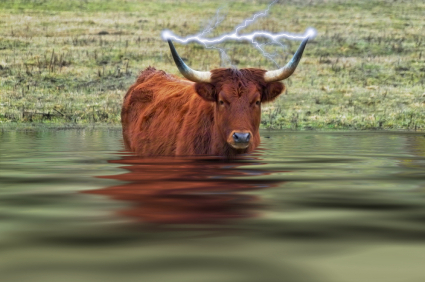
It is common sense that not everything works according to plan 100% of the time. Given this reality, a sensible approach is to minimize risk exposure when sensible.
Eliminating electricity from your watering strategy is an area where this is possible and makes sense:
- No electric bill
- Should you experience a power outage in the winter, your animals will still have uninhibited access to fresh, clean, warm water.
- No risk of electric shock.
- A leading industry manufacturer of cattle-trough immersion heaters has issued a recall of products sold as recently as 2009 due to a shock risk.
- Water Delivered Fresh from the water supply line at ~50 F Year Round
- No risk of fire
- Fire risk can stem from heating elements with faulty wiring, defective electric equipment, or misuse/abuse by your animals
- Barn fires stemming from the use of electric, in-tank heaters, and float, or even submersible heaters are often tragic and unfortunately a reality of life
“With a floating trough heater, “young” or “mouthy” horses will play with them like bath toys, chewing on them or ultimately flipping them out of the trough and onto the ground. Also, because heat rises, this type of heater does not work well on deeper troughs in extremely cold climates. Ice will still form at the lower depths, keeping the overall temperature colder than ideal.
A shortage in the system could cause the unit to quit working. Worse, it could electrify the water, creating a shocking effect when your horse tries to take a drink….And of course, make sure electrical cords are well out of reach. If a horse chews through an electrical cord, it may be the last thing he ever chews on!”
(November 2000 issue of Horse Illustrated)
“Electric water heating coils can pose a problem if they are not attended to because once the water has boiled out the coil will continue to heat the bucket, allowing heat to transfer to adjacent materials. In November of 2000, twenty Standardbreds lost their lives in a fire whose cause was believed to be a portable submersible electric water heater. Before you add heat, for whatever reason—please carefully consider if it is really necessary.”
Waterer Performance in Summer or a Hot Climate
- Temperature
- Humidity
- Quality and Quantity of the water available
- Bird feces and other contaminants falling into the water
- Small rodents drowning in the water supply
- Algae build-up
- Larvae
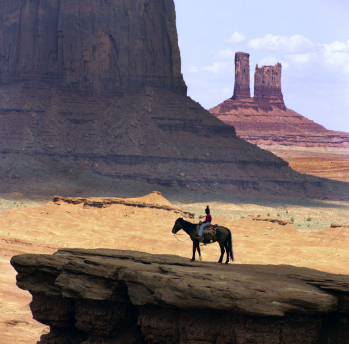
Knowing your horse, cattle, or livestock ALWAYS have cool water available during the hottest summer months will ensure your animals are drinking enough water to stay properly hydrated. In addition to the direct health benefits to your animals, you can also benefit from no more scrubbing algae out of troughs and the convenience of no longer filling water buckets or troughs daily!
Learn how much money you can save by replacing your electric waterers or avoiding them altogether.
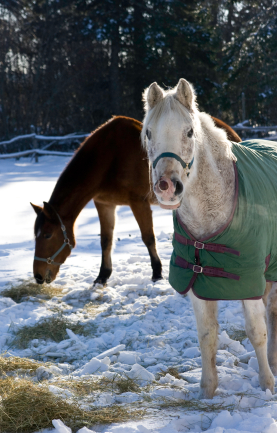
Caring for horses, cattle, and livestock during the winter is a task with the main goal of ensuring the animals remain healthy. In the winter, as in any other season, animals need a combination of nutrients to remain healthy. Energy derived from feeds and the resulting body heat is very important for horses, cattle, and livestock health and survival. If any animal is not consuming enough water, it will eat less feed than it would otherwise.
There are several reasons an animal will not consume an adequate amount of water during the winter months:
- The water provided is too cold to drink comfortably.
- A trough or bucket is completely frozen over.
- Water is too hot due to a malfunctioning or improperly adjusted water heating device.
If a horse considers water to be too cold it will not drink enough and as we've all heard before, “You can lead a horse to water, but you can’t make him drink”. This is never more true than in the winter months. It’s well-documented that water should be at least 40° Fahrenheit. Studies show that increasing water temperature from just above freezing (read here – icy or frozen buckets or troughs) to 40°- 65° Fahrenheit, will increase the amount of water consumed by 40%.
If for some reason, one chooses not to or is unable to adhere to these guidelines, there are essentially two problems that can arise from horses not consuming enough water during winter months:
- Decreased feed intake; This will have a direct impact on the animal’s ability to maintain body weight as well as decrease their ability to consume enough feed/energy to tolerate the cold weather.
- Impaction colic; This risk is more widely discussed, and possibly more harmful. If a horse doesn’t consume enough water either because it’s frozen or it’s too cold for them to drink comfortably, the risk of impaction colic rises sharply. On top of that, even if the horse does drink a proper amount of water; water that is too cold on the digestive tract causes disturbances during digestion and absorption.
These risks can be mitigated by installing the Drinking Post Waterer, which provides water at an ambient 50° Fahrenheit, ensuring there will be adequate water consumption throughout the winter months. The waterer maintains this temperature year-round without the need for electricity to warm it because the water source is below the frost line. This ensures the temperature of the water is to animals' liking throughout the winter and will assist in promoting good health.
In addition to the health benefits to the horses, there are some additional benefits to the caretaker in the winter months:
- No breaking ice off troughs or buckets
- No refilling buckets or troughs in cold weather
- No unnecessary energy costs associated with heating water all winter
Cost Savings of Utilizing Electric vs Non-Electric Waterers
Anyone who’s paid the electricity bill for a ranch during a cold winter can understand the need to reduce energy costs.
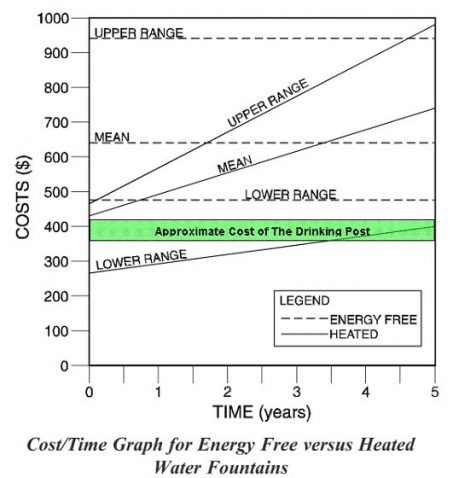
Even when compared to some of the energy-efficient heated waterers (with a lower initial purchase price), The Drinking Post Waterer will still completely pay for using means of eliminating the normal operating costs of an electric waterer within a few years. Not to mention, this is assuming everything runs perfectly, there is also the chance you might not notice an improperly adjusted thermostat and end up paying for energy all year long.
In addition, if you ever experience a power outage during the winter months, you will not have to be concerned about your waterers freezing because The Drinking Post Waterer requires no electricity to function perfectly throughout the toughest winters.
While some other water choices can offer a year-round supply of water, The Drinking Post is unique in that it requires:
- No electricity
- No float
- No thermos system
- No de-icer
- No heat cable
- No special installation requirements for cold climates!
The water post delivers the most reliable and cost-effective means to provide water to your horse, cattle, and livestock, hands down!
Testimonials
Ruth Moore
"We've had our Drinking Posts since 2002 and could not be happier with them. The health benefits of not having any standing water are fantastic. Cool water in the summer, warm water in the winter. In addition, they've proven to be a areal-time-saver when compared to hauling buckets and hoses."
Ruth Moore - Belton, MO
Shoni Melton
"Our ranch is along a riverbed in Mosby, MT. It gets COLD here. We will experience temperatures of - 40 degrees here in the winter and our Drinking Posts have always worked great year-round. Thanks!!"
Shoni Melton - Mosby, MT
Kandi Childress
Kandi Childress - Hope, ID
Barbara McElnea
"I have owned 8 Drinking Post Waterers for over 20 years. They are fabulous!!!"
Barbara McElnea - Carbondale, CO
Alana Hardy
Alana Hardy - Avondale, CO
Dan Burger
Dan Burger, Colorado
Mel Johnson
Mel Johnson - Bend, OR
Jim & Joyce Glover
Jim & Joyce Glover - Grantsburg, WI
Sarah Seidman
Sarah Seidman Pease Farm Stable, Middlesex, VT
Peggy Swingle